


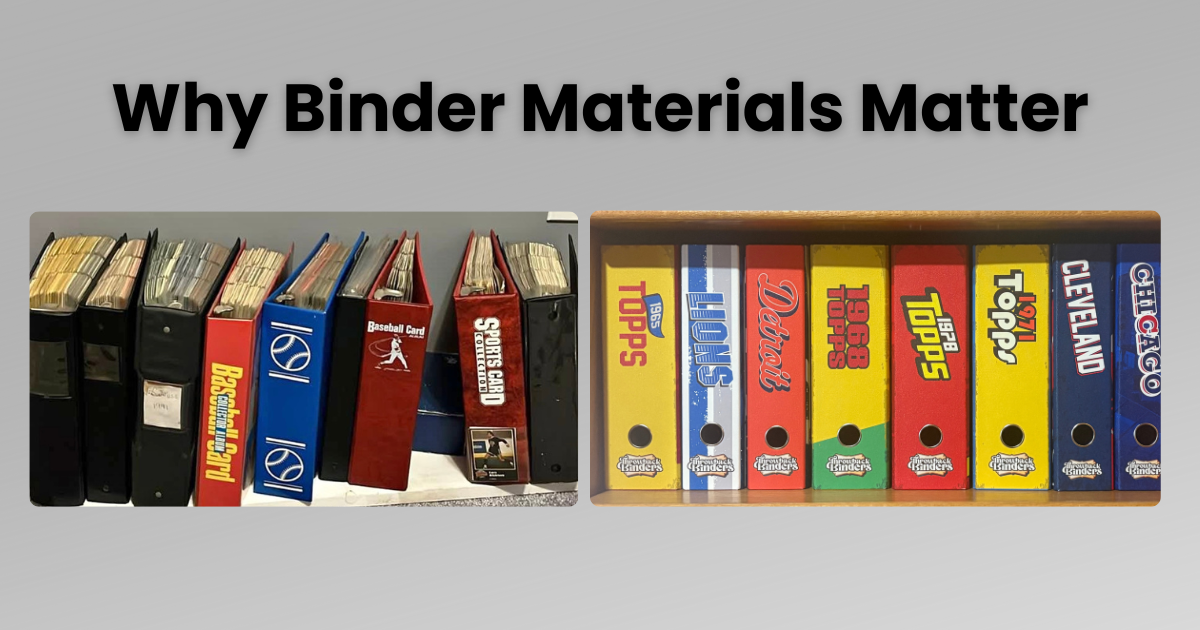
Why Sports Card Binder Materials Matter: The Hidden Difference Collectors Can Feel
Most collectors judge a binder by the artwork on the outside or the pages inside. But the real difference - the thing that determines whether your binder feels solid in your hands a few years from now or starts sagging like an old cardboard box comes down to one thing: Materials.
In the trading card world, binder construction has stayed more or less the same for decades. Thin cardboard. Vinyl wraps. Screen-printed graphics. Repeat.
But if you’ve ever picked up one of those binders and thought, “Man, this thing feels flimsy,” you’re not wrong. There’s a reason the corners dent, the covers warp, and that printed vinyl eventually cracks or fades.
Throwback Binders were built to solve that problem from the ground up - literally - starting with the material that matters most.
The Problem With Most Binders: Vinyl Over Thin Cardboard
Pick up a typical hobby binder and press your thumb into the cover. What you’re feeling underneath that vinyl is almost always thin, low-density cardboard occasionally protected with a thin pad, the same stuff used in packaging.
That cardboard is wrapped in a sheet of vinyl, heat-sealed around the edges, and then (sometimes) printed with graphics.
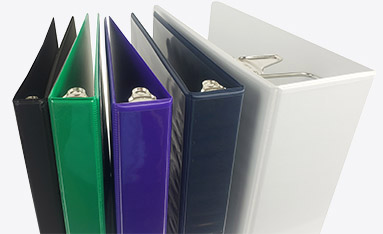
It sorta works. It’s inexpensive. But collectors know the truth:
- It bends easily
- It creases permanently
- The vinyl can crack or bubble
- Colors fade over time
- It feels cheap
You can store cards in it…but it never feels like something you’d proudly display.
Some binders improve on this slightly by using a thick cardboard core and inserting printed artwork behind a clear plastic sheath. Better, sure - but still:
- The clear plastic scratches and isn’t conducive to autographing
- The insert artwork may shift or wrinkle
- The printed art stops at every edge and can't get past the ring rivets
- The cover has no continuity - front, back, top, and bottom all feel like separate pieces
They’re “serviceable.” But they’re not display pieces. They’re not something you should buy for a decades-long card collection.


What Throwback Binders Use Instead: High-Density Chipboard
Every Throwback Binder starts with high-density chipboard - the same rigid, weighty material used in:
- Premium hardcover books
- Archival-grade storage boxes
- Luxury packaging
This isn’t flimsy cardboard. This is hardcover-book quality, engineered to stay flat, straight, and rigid.
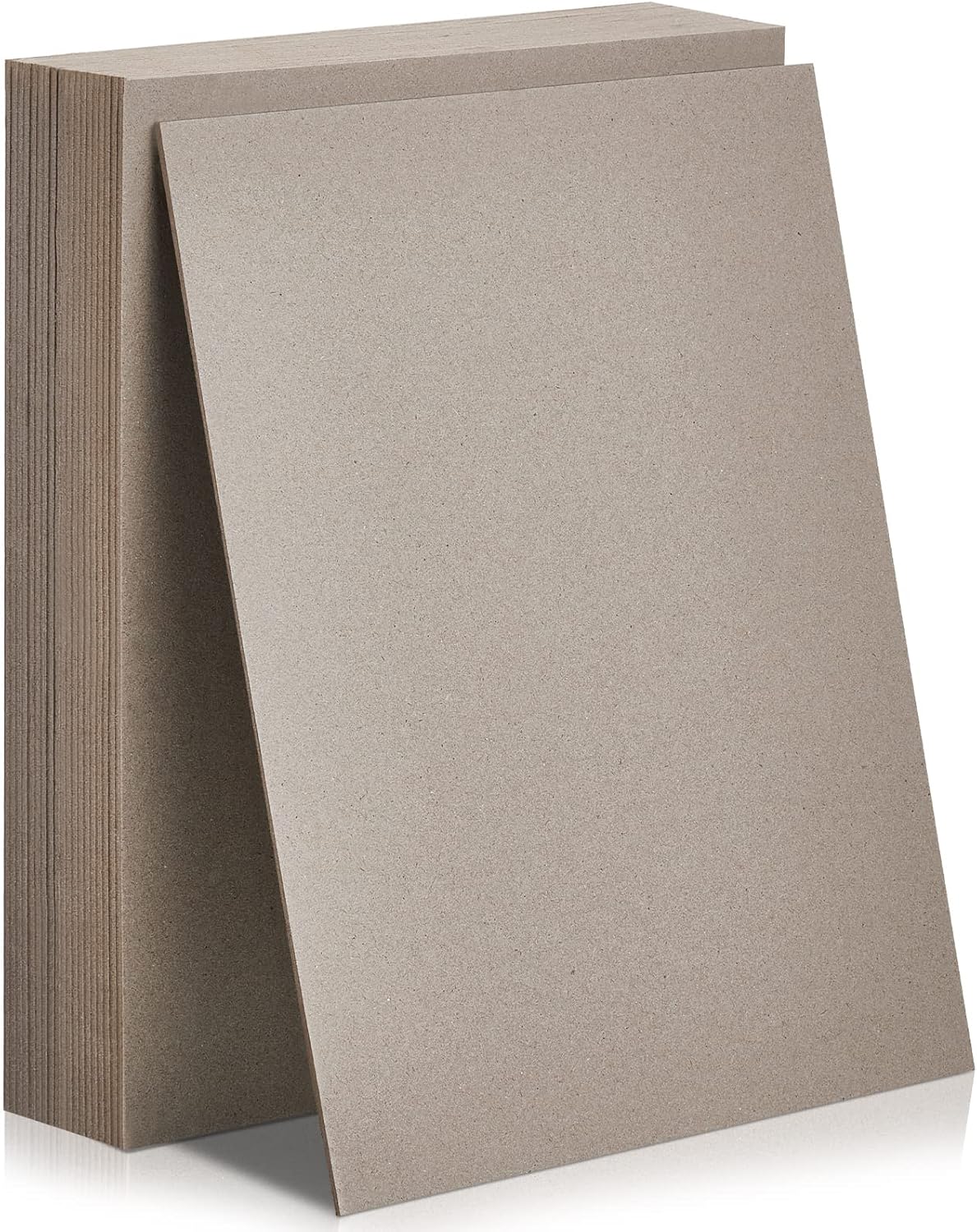
Why chipboard matters:
- It doesn’t flex like cardboard
- It resists warping
- It feels solid in your hands
- It supports heavy page loads without tipping over or warping
- It’s built to last decades, not months
Chipboard instantly makes a binder feel like a premium product - because it is.
Wrapped in a Canvas-Like Linen Material, Not Vinyl
Once the premium foundation is set, the next difference is the wrap.
Instead of vinyl, every Throwback Binder is wrapped in a canvas-like woven linen material the kind you’d normally find on art books, special editions, or collector’s items.
This is where our binders really separate themselves from anything else on the market.
Why the linen wrap is better:
- It has a rich, tactile, matte texture - great for autographs
- Artwork prints with depth and vibrance
- The colors look more like real artwork than printed plastic
- The material resists scratches better than vinyl
- No cracking, peeling, or bubbling
- It feels high-end the moment you pick it up

And the visual continuity is unmatched:
The material flows seamlessly from front to back, over the spine, top, and bottom - just like a premium hardcover book.

There are no inserts. No plastic windows. No pieces sliding around.
Just clean, uninterrupted artwork.
It’s cohesive. It’s intentional. And it’s something collectors immediately notice.
A Binder Designed to Be Displayed
Throwback Binders weren’t designed to be “good enough.” They were designed to be:
- A display piece
- A collector’s item
- A tribute to the era or team it celebrates
- A durable piece of your hobby you can rely on for decades
BONUS: Our Binders also use angled D-rings, so the corners of those top sheets don’t get bent!
Collectors spend hundreds or thousands of dollars on the cards they love. Their binders should reflect that.
A cheap vinyl binder protects cards. A Throwback Binder protects cards and the story behind them.
|
FEATURE |
TYPICAL VINYL BINDER |
INSERT-STYLE BINDER |
THROWBACK BINDER |
|
Core |
Thin cardboard |
Medium cardboard |
High-density chipboard |
|
Outer Wrap |
Printed vinyl |
Vinyl + clear plastic sheath |
Canvas-like linen wrap |
|
Artwork |
Printed on plastic |
Printed insert behind plastic |
Printed directly on woven material |
|
Feel |
Light, flexible |
OK but plastic feel |
Solid, book-quality, premium |
|
Durability |
Prone to warping/cracking |
Sheath scratches; insert shifts |
Built to last for decades |
|
Display Quality |
Low |
Medium |
High — looks like art |
Why We Obsess Over Materials
Because collectors deserve better.
- Because your cards tell stories
- Because the era-specific nostalgia deserves to live in something worthy of it.
- Because a premium binder shouldn’t feel like a school supply.
Throwback Binders are built with the materials that make premium books last 40–50 years on a shelf. That’s not an accident - it’s the entire point.
Final Thought
There are a lot of places to buy a trading card binder. But if you want something with substance - something built like a collector’s item, not a classroom supply - then materials matter.
And that’s exactly why Throwback Binders are made the way they are.
READ OTHER RELATED ARTICLES


Be first to hear about new binder drops.
We’ve got more teams and sets coming. Don’t miss out on the next release.